
What happens in craniosacral therapy
Craniosacral therapy goes back to the American osteopath William Garner Sutherland, one of the most important students of Andrew Taylor Still, the founder of osteopathy. Sutherland began working with his hands on the skull around a hundred years ago.
Its name combines the skull, cranium in Latin, with the sacrum. The approach assumes that the two are connected via the spine and the meninges, and that a subtle rhythm shows itself in this system which trained hands can feel.
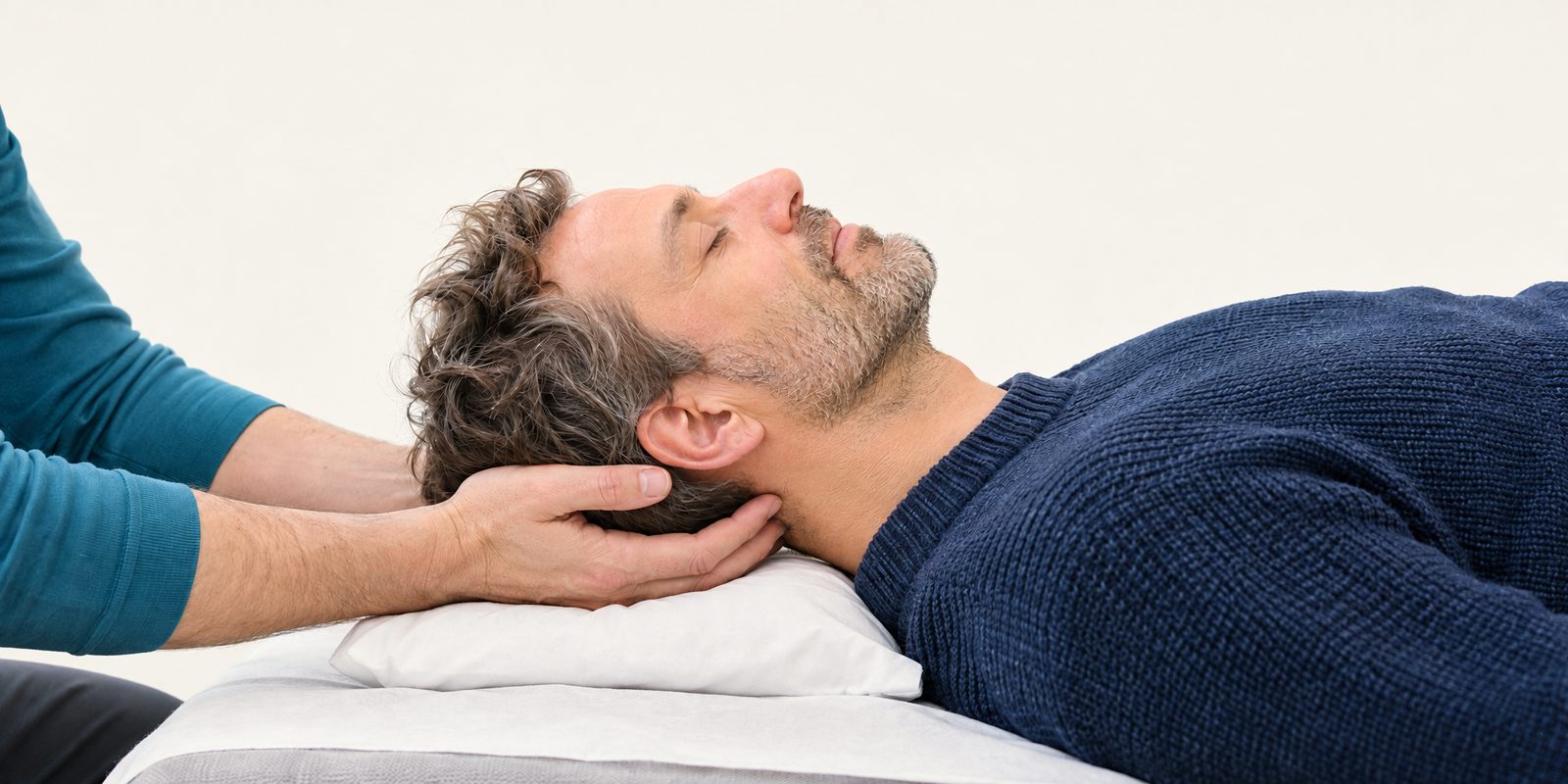
The treatment is guided by this. The hands rest quietly and follow the tensions in the tissue, with barely more pressure than their own weight.
The American physician and osteopath John Upledger developed craniosacral therapy from Sutherland’s work in the 1970s.
A group of osteopaths specialised in the techniques of Sutherland, Harold Magoun and Upledger.
For reasons of professional politics with regard to the American Osteopathic Association, they called themselves craniosacral therapists rather than osteopaths.
Craniosacral osteopathy and biodynamics
I learned craniosacral therapy as part of my first osteopathic training, and I work with it as one branch of osteopathy, not as a separate therapy alongside it.
Osteopathy has several such branches: some techniques work on muscles and joints, others on the internal organs.
Craniosacral work is the quietest of them; it often starts at the head, spine and sacrum, but can be used on the whole body.
Biodynamics developed out of craniosacral therapy, just as craniosacral therapy developed out of osteopathy; it was shaped above all by the American osteopath James Jealous.
In biodynamics, perceiving comes even more to the fore: the hands barely intervene and give the body time.
Several very slow rhythms of the body can be felt and regulated in this way, including the “SELF Waves” (super extremely low frequency) described by Olaf Korpiun.
Craniosacral work can fill the whole appointment or be part of an osteopathic treatment. I will suggest which techniques suit you after our conversation. If you are coming specifically for craniosacral therapy or biodynamics, book an osteopathy appointment online and mention it in the comment field, or tell me at the start of the appointment.
How an appointment works
I set aside about 50 minutes for an appointment.
Arrive and talk.
We talk about what brings you to me and how you are feeling right now.
Lie down.
You lie on your back, ideally in comfortable clothing without coarse fabrics that would distract my hands. If you would like to change position at any point, just say so.
Treatment.
My hands rest on your head and neck, your back or your sacrum. Much of it happens in stillness; you can close your eyes, and if you want to say something, there is of course always room for that.
Review.
At the end, I tell you which subtle details I noticed and whether I recommend another appointment.
How many appointments it will take cannot be said in advance. Often it is three, usually about two weeks apart.
What an appointment costs
An appointment costs €150, whichever techniques we choose and whether or not acupuncture is added.
After the appointment, you receive an invoice based on the fee schedule for Heilpraktiker (state-licensed non-medical practitioners), which you can submit to your health insurer.
It is listed as osteopathy, because craniosacral work is part of osteopathy and has no item number of its own in the fee schedule.
Statutory health insurance
many insurers pay a contribution towards osteopathy; at my practice you get it with every one of them.
TK and SBK
both keep their own, stricter lists; my practice is on them.
Private and Beihilfe
in my experience, private health insurance, Beihilfe (civil servants’ allowance) and supplementary insurance for Heilpraktiker treatment usually reimburse 70 to 100 percent.
What your insurer pays and how to make sure you get the contribution is explained on the Costs and health insurance page.
Who will treat you

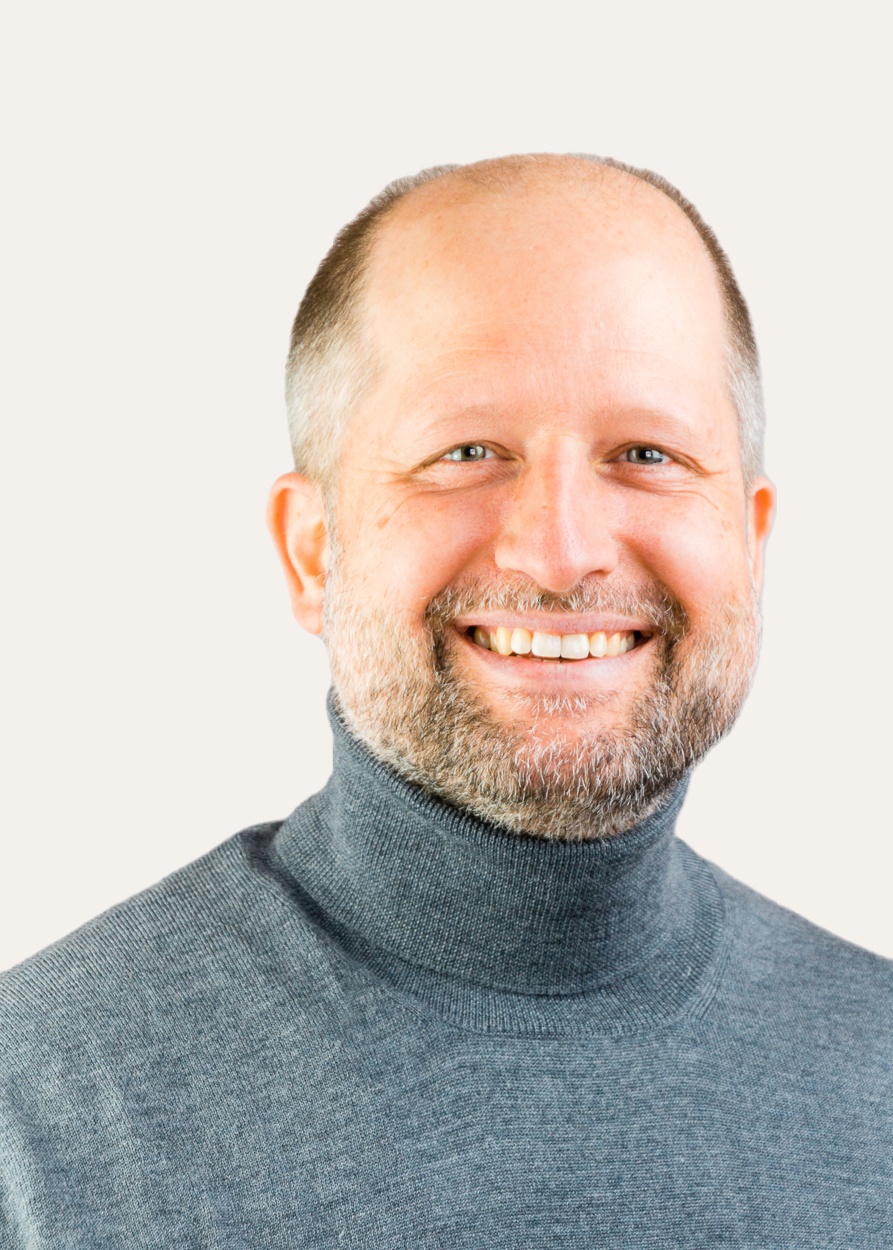
I am a Heilpraktiker and have run my own practice in Munich since 2010.
Training
osteopathy, paediatric osteopathy and craniosacral therapy in a five-year training at the Zentrum für Naturheilkunde with Olaf Korpiun, followed by studies in osteopathic medicine
Certified
by the Verband freier Osteopathen (an association of independent osteopaths)
Branches
over the years, I have studied the different branches of osteopathy in depth, from Sutherland’s early techniques to biodynamics.
Teaching
acupuncture at ABZ München since 2011, internal martial arts and Qi Gong at The Soul of Kung Fu

You can read more about my path under About me.
